Event Report: July 16
“International Outreach Event on Japan’s Physical AI Policy” Held: Domestic Multimodal Foundation Model Development Project “FRONTia” Presented to Audiences in Japan and Abroad
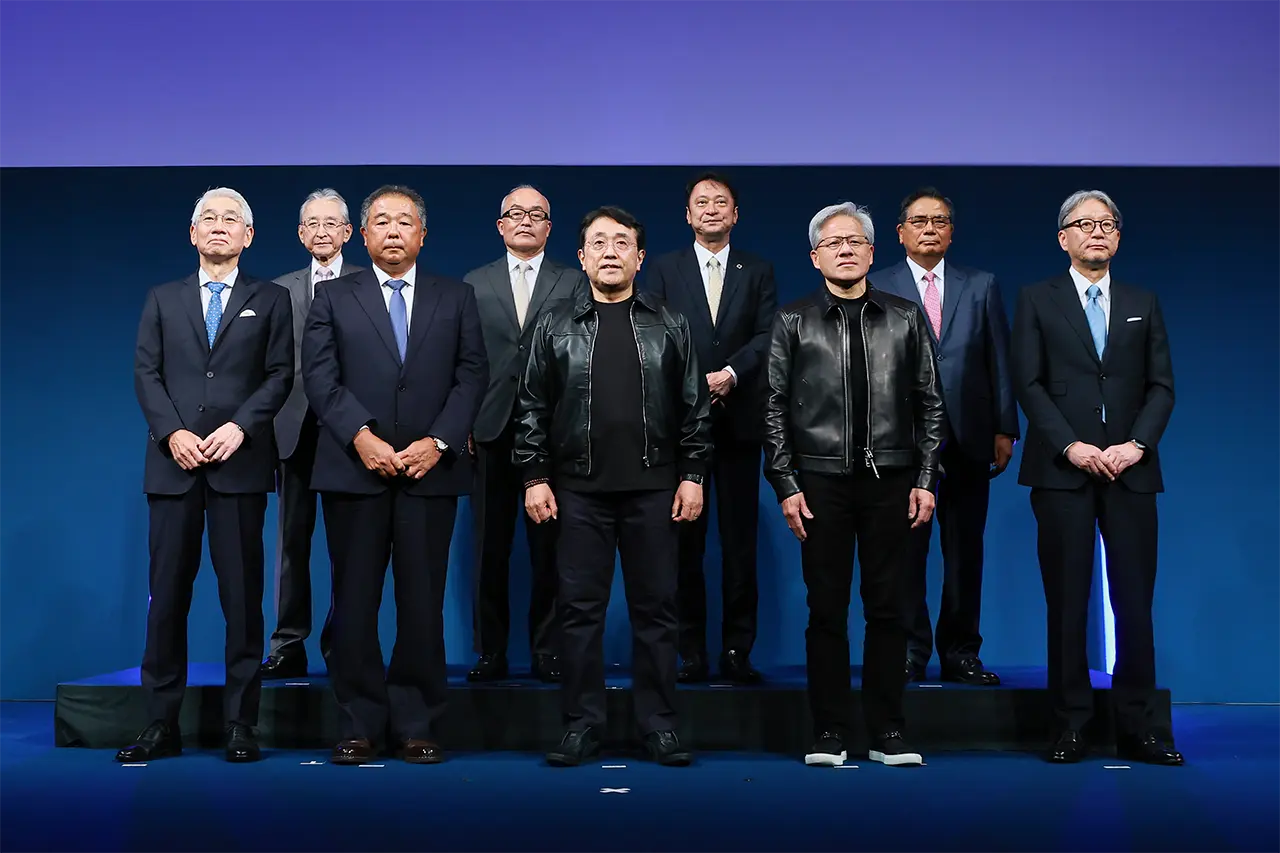
On July 16, 2026, the “International Outreach Event on Japan’s Physical AI Policy” was held at The Prince Park Tower Tokyo.
The event aimed to publicize Japan’s efforts toward the realization of physical AI to audiences in Japan and abroad, as well as to promote collaboration among participants involved in physical AI, including universities, research institutions, and government officials. The event marked the first public announcement of “FRONTia”, the project name for the development of a domestic multimodal foundation model to serve as the basis for AI robots and physical AI.
FRONTia is an acronym derived from “Foundation for Real-world Omni-Native Trustworthy Intelligence & Alignment”, reflecting the vision of creating a trustworthy AI with a natural understanding of the real world. It also symbolizes Japan's determination to take on the challenge of standing at the frontier (FRONT) of technology and pioneering a world where people and AI thrive together (ia).
At this event, in addition to the FRONTia vision for a domestic multimodal foundation model and its research and development direction, the Japanese government presented its overall framework of AI policies. There were also messages from domestic and international AI researchers, and presentations by the selected implementation organizations of the initiative. Representatives from Noetra Corp. and the National Institute of Advanced Industrial Science and Technology (AIST), both selected for the FRONTia initiative, gathered with other stakeholders involved in the “Generative AI Accelerator Challenge (GENIAC)” project to share their vision for realizing a Japan-developed physical AI infrastructure and for enhancing the country’s industrial competitiveness.
Expectations and Prospects for the Realization of Physical AI
The event opened with a video message from Prime Minister Sanae Takaichi:
“Physical AI will be essential for advancing manufacturing sectors that are adopting robotics, such as information and communications, defense, and aerospace. Moreover, it represents a technological field that constitutes an essential part of Japan’s winning strategy, as the data accumulated across our industrial sites — in manufacturing, in logistics, in infrastructure — can be a source of Japanese competitiveness. A culture of craftsmanship, a passion for precision, and commitment to quality: these are the strengths of Japan’s factory floor. Building on this strong foundation and drawing together Japanese expertise while connecting with brilliant minds across the globe, we must give rise to an AI made in Japan that the world can trust.”
“My Cabinet has set out the Japan’s Growth Strategy. Guided by our Public-Private Investment Roadmap for 17 strategic fields, we are accelerating strategic investment here at home. In Physical AI, including semiconductors, we anticipate public and private investment of 80 trillion yen by fiscal year 2040. The first step on that journey, building foundational models for Physical AI, begins today with the launch of the FRONTia Project.”
“At a time when reliance on foreign AI has posed challenges for AI development here at home, I find it reassuring to see the platform for a domestic model taking shape in the field of Physical AI. Let us build trustworthy Physical AI here in Japan and launch it into the world. Let us make FRONTia the banner of Japan’s resurgence.”

(Link: Prime Minister‘s Office of Japan HP)
Next to take the stage was Minister of Economy, Trade and Industry Ryosei Akazawa:
“Now, in this age of big data combined with AI, the key to advancing AI transformation, or AX, across a wide range of sectors is field data. In the age of big data and AI, Japan’s path to success lies in the fact that we are both a super-aged society and a disaster-prone nation. Our society is older, and we face more disasters than almost any other country. That is where the data lies. What may look like a disadvantage can, in fact, become our path to success. I have made this point time and again.”
“Following the accident at the Fukushima Daiichi Nuclear Power Station, Japan is undertaking an unprecedented decommissioning effort under extraordinarily harsh conditions. Sensors and cameras must be carefully adapted and fine-tuned to operate in high-radiation environments. The operational data generated there is itself invaluable big data. That allows us to accumulate vast amounts of Physical AI data. Japan is also home to world-leading manufacturing sites. These are the kinds of strengths Japan possesses. Key fields include healthcare for older adults, disaster response, labor-saving solutions for manufacturing, and the decommissioning of the Fukushima Daiichi Nuclear Power Station. Addressing these social challenges by harnessing field data from each setting and Physical AI that operates in the real world is essential. I also believe this will become a powerful driver of Japan’s economic growth.”
“We will build a highly trusted multimodal foundation model capable of understanding the real world. To that end, exceptional engineers have come together in a consortium led by Noetra Corp. and the National Institute of Advanced Industrial Science and Technology (AIST). A new challenge is beginning, led by outstanding engineers from Japan and around the world. I sincerely hope that every engineer working on this project will be able to perform to the very best of their abilities. I wholeheartedly welcome even more people from diverse backgrounds who share the passion to learn from one another about cutting-edge technologies and needs, take on difficult challenges, and open new frontiers for a world where people and AI coexist.”
Special Speech by Jensen Huang, Founder and CEO of NVIDIA
He described AI as the key technology that will power the next industrial revolution. He also expressed his high expectations for Japan’s competitiveness in the fields of manufacturing technology and robotics, in which the country has many years of experience. He also touched on the significance of FRONTia, a collaborative project between industry and research institutions that aims to realize physical AI, and shared his hopes for its future development.
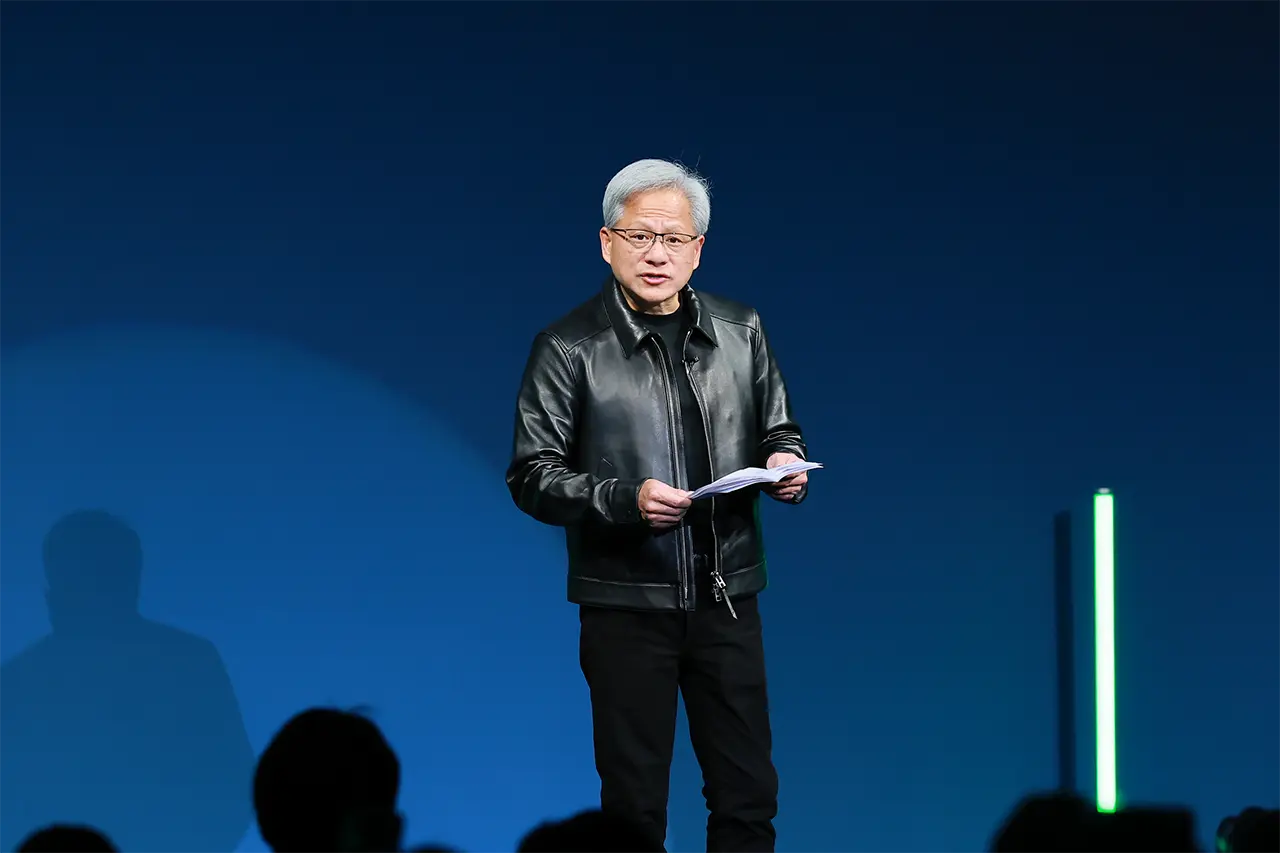
Regarding Japan’s industrial expertise, he emphasized,
“It represents Japan’s national intellect and is a national asset. Through concepts such as takumi [craftsmanship], kaizen [continuous improvement], kanban [method to manage work and inventory], and genba [the actual site], Japan has built up this industrial knowledge as an integral part of daily life over many generations. Japan must not lose this expertise.” He went on to affirm the importance of Japan developing its own AI infrastructure, stating, “Japan should not outsource its national intellectual capital. Japan itself must build, develop, protect, and deploy Japan AI. Physical AI is the foundation of the next industrial revolution, and its future should be shaped in Japan.” He also announced that NVIDIA will provide Japan with the world’s first full-stack AI platform, designed for the national AI infrastructure and expressed the company's commitment to supporting Japan’s unique infrastructure system. He concluded by saying, “Japan’s industrial expertise will evolve into Japan AI. The next industrial revolution will begin right here in Japan,” expressing high hopes for the development of an AI infrastructure originating in Japan.
World-renowned AI Researchers Share Their Expectations
Yutaka Matsuo, chair of the Expert Committee on Artificial Intelligence Strategy and professor at the University of Tokyo, addressed the audience, while, world-renowned AI researchers and Turing Award laureates Yann LeCun and Yoshua Bengio, contributed video messages. They shared their insights on the future of industry that physical AI is paving the way for, as well as the significant opportunities in the manufacturing and robotics sectors—areas in which Japan has a competitive advantage — and expressed their expectations for the success of the FRONTia project.
Yutaka Matsuo, Chair of the Expert Committee on Artificial Intelligence Strategy and Professor at the University of Tokyo
In his speech, Yutaka Matsuo noted that although Japan has made steady progress since the advent of generative AI — including expanding GPU infrastructure, training AI development professionals, and establishing AI-related policies — the country still faces challenges when competing with the world’s most advanced models.
He went on to state that physical AI is “an extremely important issue for Japan, which is facing a labor shortage” and emphasized that it is an area in which Japan can capitalize on its strengths in sectors such as robotics and manufacturing. He added that it is “truly a battle we cannot afford to lose.”
He also expressed hope that, although developing a foundation model is no easy task, competing with the world’s leading players would foster competitiveness in the next generation. Touching on the significance of launching a physical AI project like FRONTia, he offered words of encouragement, saying, “I hope that all of Japan will work together to ensure the project’s success.”
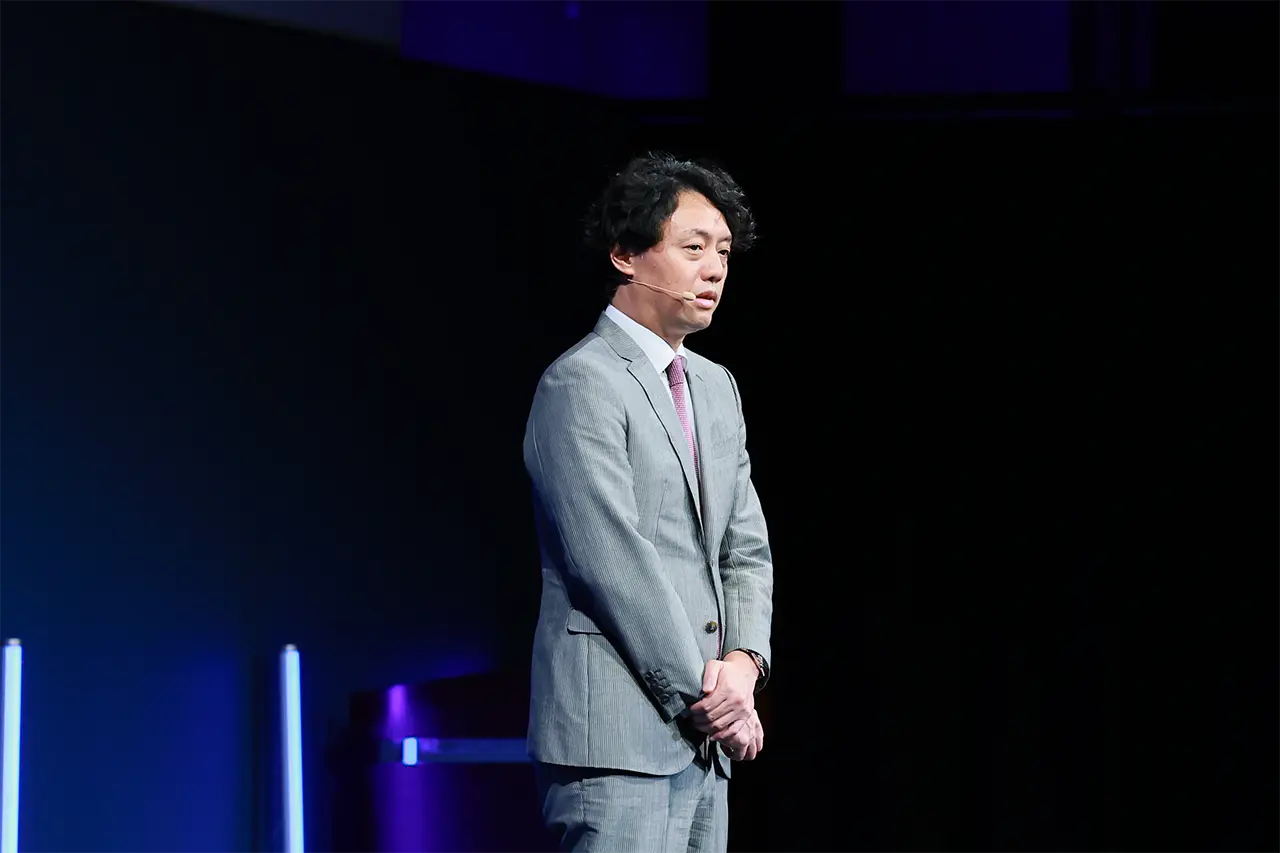
Yann LeCun, Co-founder of AMI Labs and Professor at New York University
In his message, Yann LeCun emphasized the importance of physical AI as the next major challenge for the field. He also noted Japan’s potential to lead the world due to its strengths in manufacturing technology, industrial robots, and engineering, and expressed his hope that FRONTia’s initiatives would send an important message to the world.
Yoshua Bengio, Founder of LawZero / Founder and Scientific Advisor of Mila
Discussing the importance of developing safe and reliable AI, Yoshua Bengio also pointed out that, given its strengths in robotics and manufacturing, Japan is well-placed to spearhead research and development in physical AI. He also expressed his hope that international collaboration will drive further technological advancements.
The Physical AI Ecosystem That FRONTia Aims to Create
Next, Satoshi Nohara, director-general of the Commerce and Information Policy Bureau at the Ministry of Economy, Trade and Industry (METI), explained GENIAC’s achievements to date, as well as the role of FRONTia in building on them.
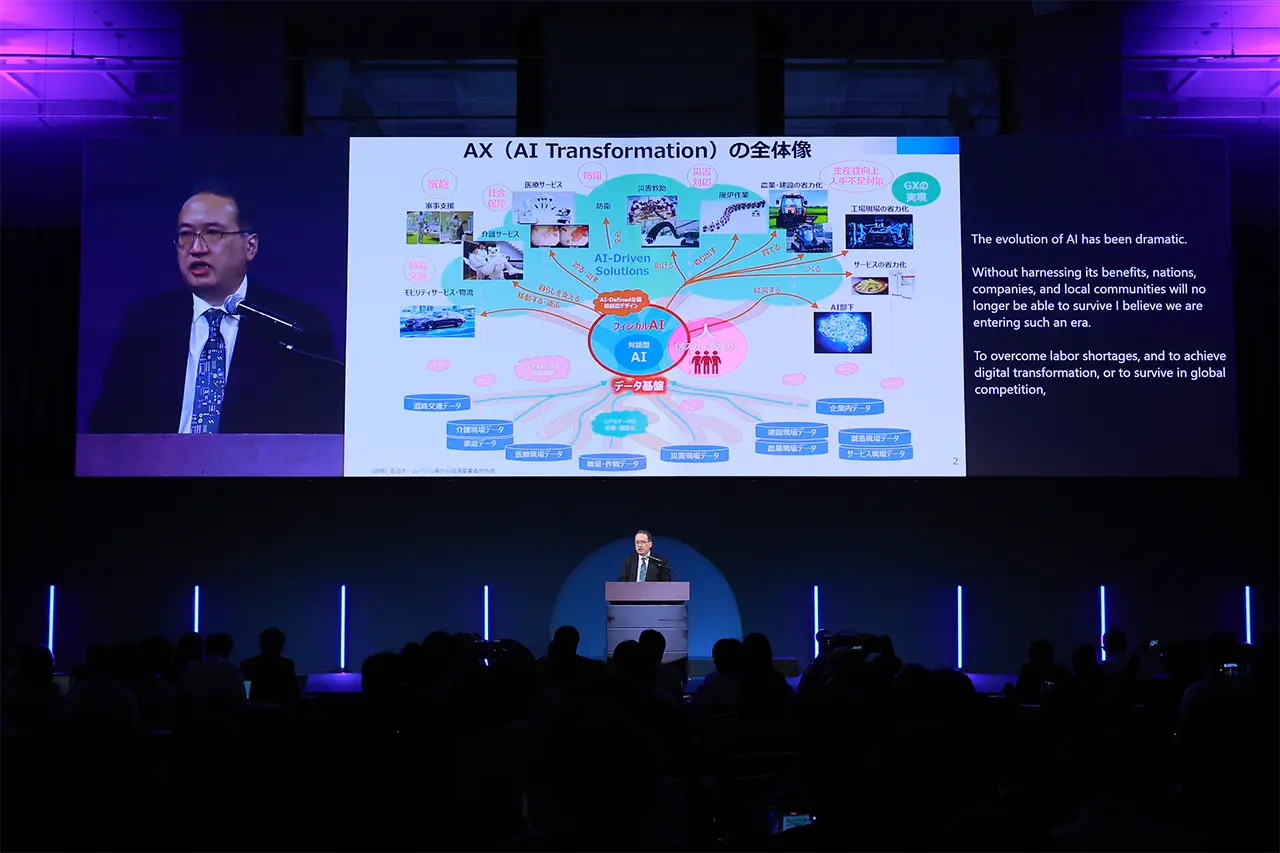
He outlined the overall vision of AI-driven industrial transformation (AX: AI Transformation), which we aim to achieve, and the “physical AI ecosystem” that serves as its cornerstone.
He then explained the rationale behind the name of FRONTia. The project’s overall structure was followed by an introduction to our partner companies for training data and international collaborators for advanced R&D. Finally, he presented the broader policy framework for the social implementation of AI robotics, including the FRONTia project. He shared our vision for deploying 10 million robots domestically by FY 2040.
Project Presentation by Selected Organizations
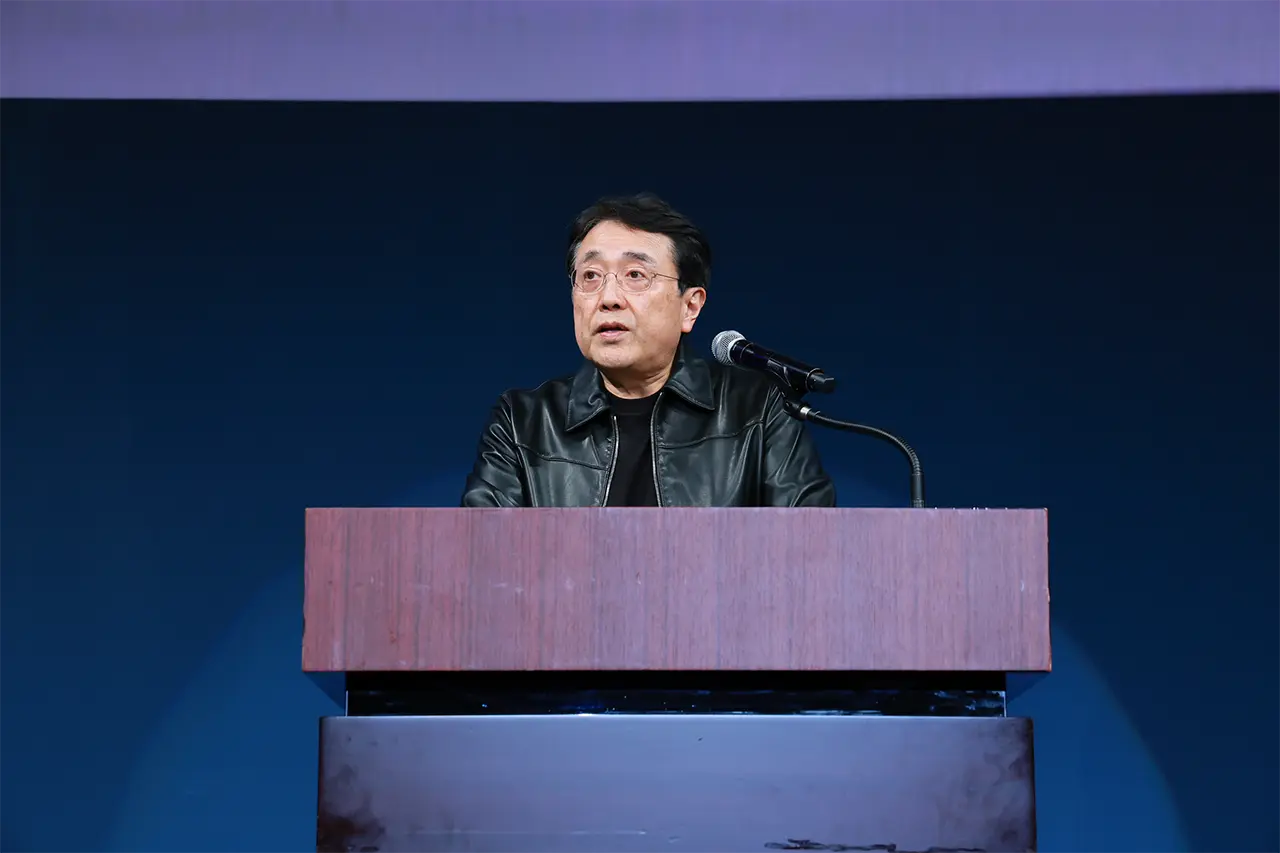
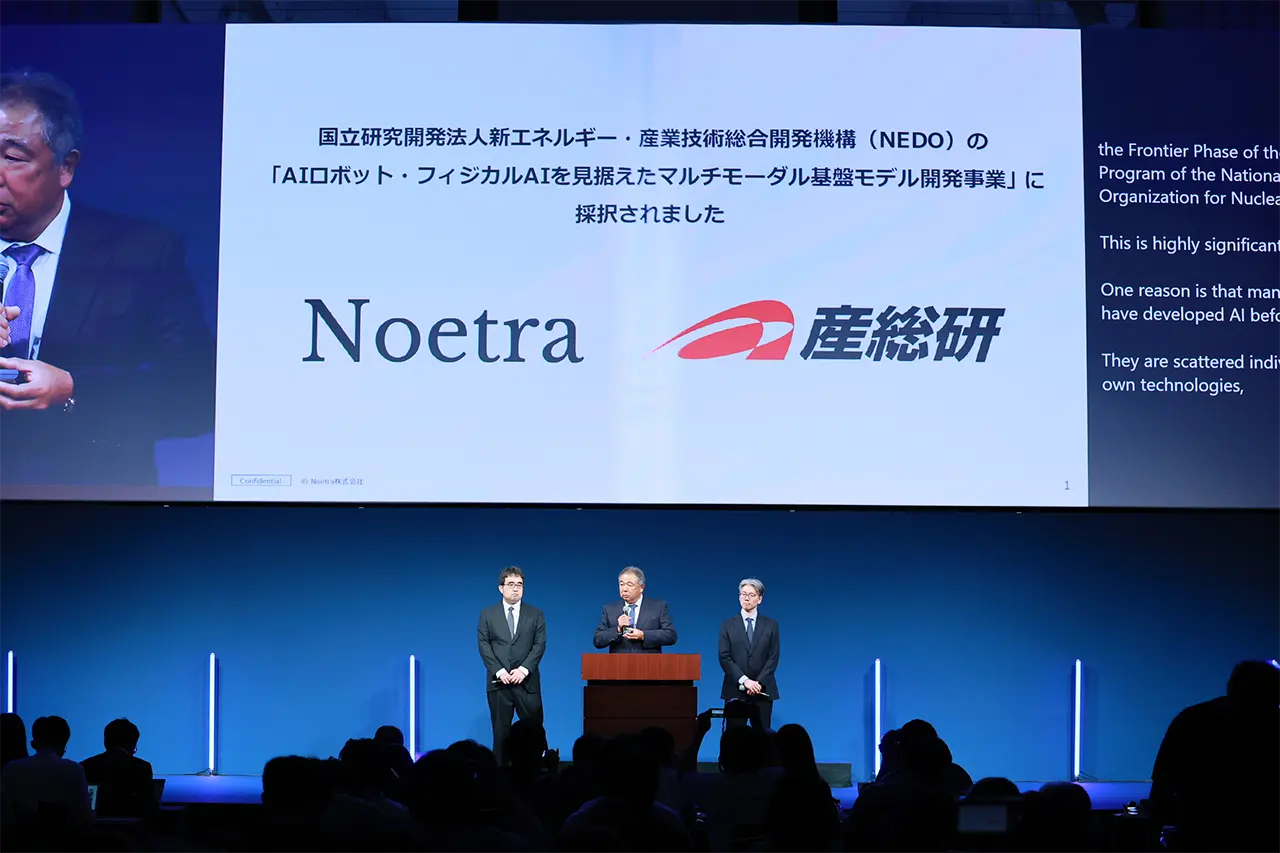
Next, Hironobu Tamba, president and CEO of Noetra; Daisuke Okanohara of Noetra’s Development Strategy Office; and Masahiro Hamasaki, deputy director of the Artificial Intelligence Research Center (AIRC) at the National Institute of Advanced Industrial Science and Technology (AIST), took to the stage to explain the research and development projects they will carry out within the FRONTia initiative.
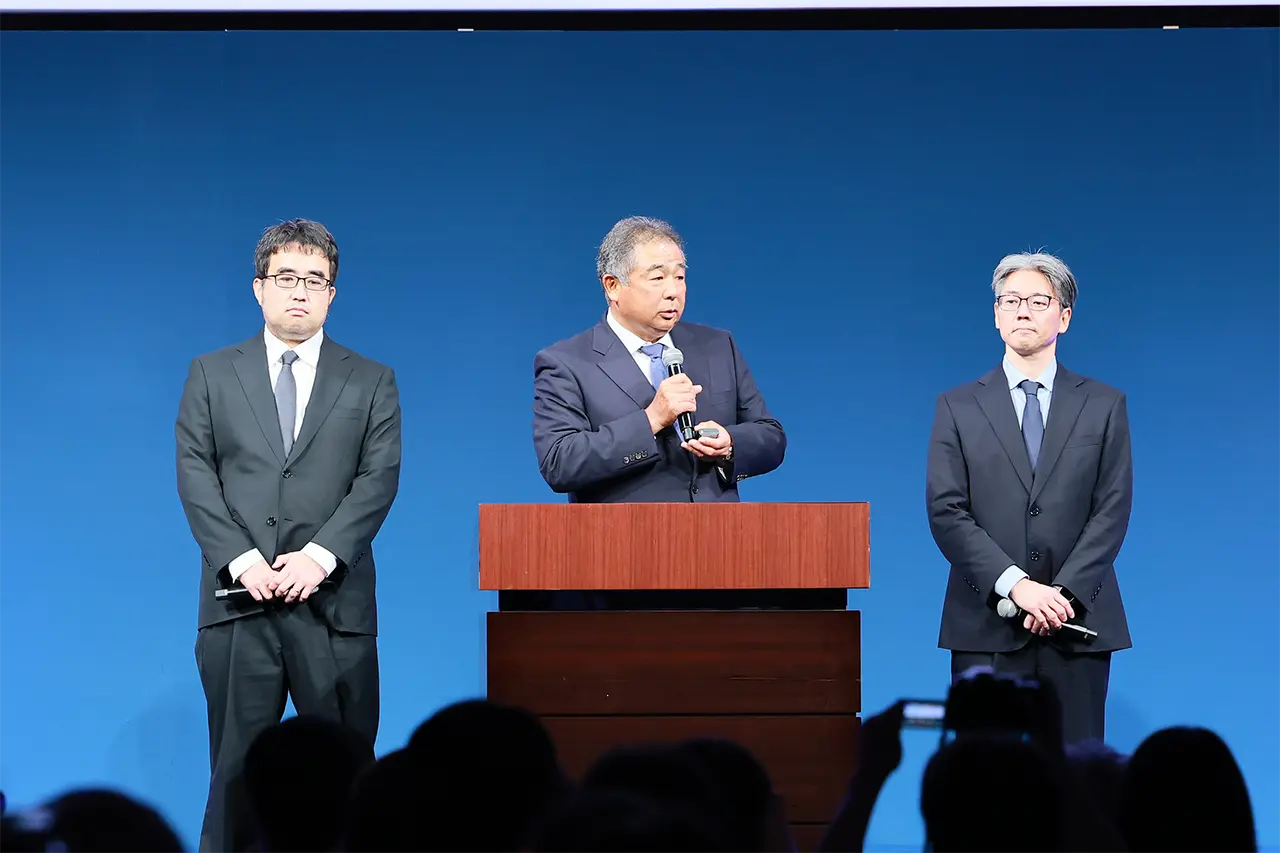
Hironobu Tamba introduced FRONTia, explaining that the initiative is driven by two integrated pillars: a Development Track responsible for building multimodal foundation models, and an Exploratory Track responsible for strategic R&D. He described it as “a major challenge that AIST — where top-class engineers who have led Japan’s AI development and world-leading researchers gather — is taking on in collaboration [with these efforts].” He also expressed his aim, as Noetra (the company responsible for the Development Track), to leverage Japan’s abundant on-site data and strong field capabilities, particularly in manufacturing, in order to realize a virtuous cycle in which insights gained from the field are reflected in AI development, and the resulting outcomes are then fed back to the field once again.
Daisuke Okanohara went on to explain that the FRONTia project’s goal is to develop “AI that can observe and understand the real world and take action in the field.” He added that this will be achieved through parallel development efforts in both reasoning and generative foundation AI.
Masahiro Hamasaki explained the Exploratory Tracks’ plan to launch and promote a variety of joint research themes as part of the research framework. The key research themes are: (1) Elucidation of Principles and Efficiency Improvements, (2) Vision and 3D, (3) Speech and Acoustics, (4) Robotics and Digital Twins, and (5) Agents. He also spoke about the vision to develop an advanced, proprietary AI infrastructure that draws on the cutting-edge research of a frontier AI development team that utilizes Japan’s premier engineering resources, whose research findings contribute to the development of world-class foundation models.
In closing, Hironobu Tamba said, “Our goal is to develop a project that will contribute to Japan’s industries, as well as to the transformation of global industries and society.” He also emphasized the importance of collaboration among field operators, companies, and research institutions to develop models, and encouraged a wide range of stakeholders to participate.
Closing Remarks by NEDO
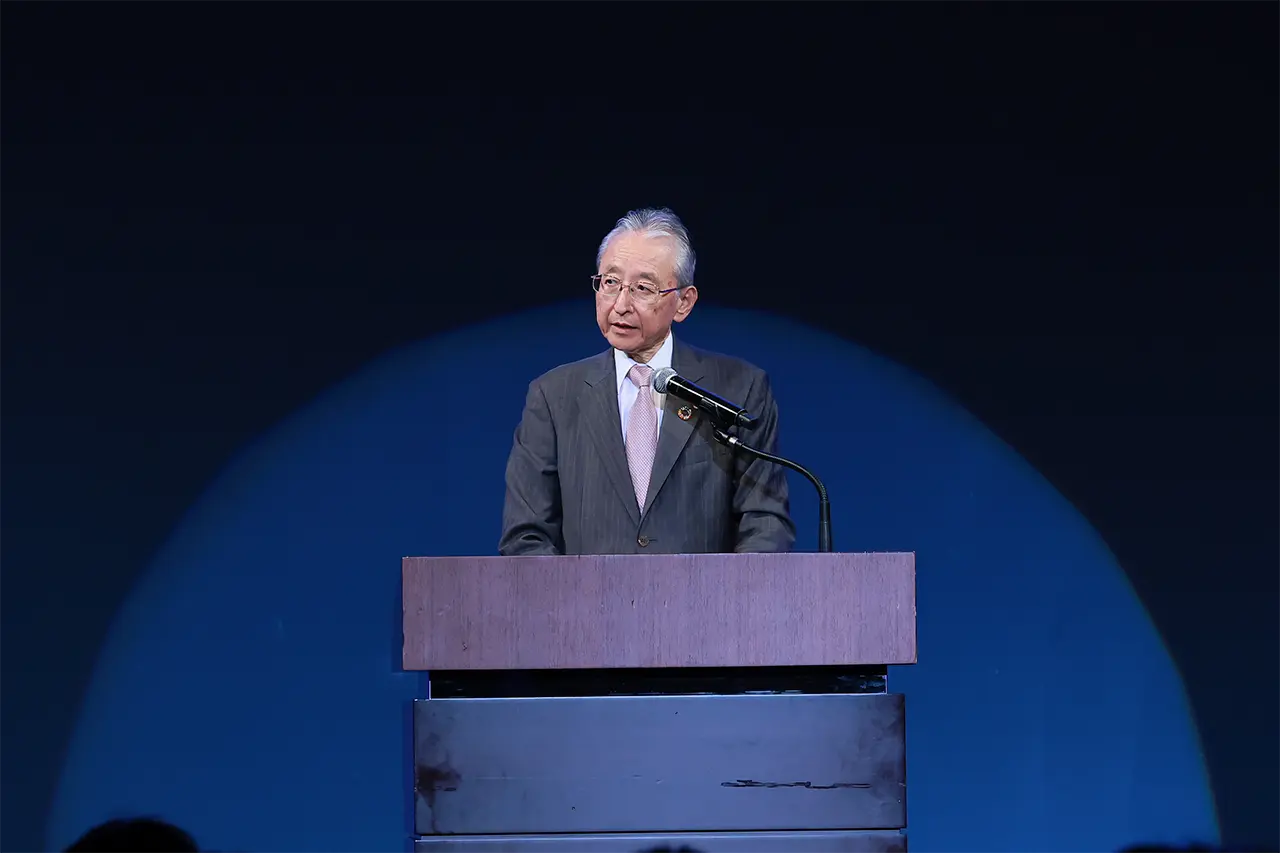
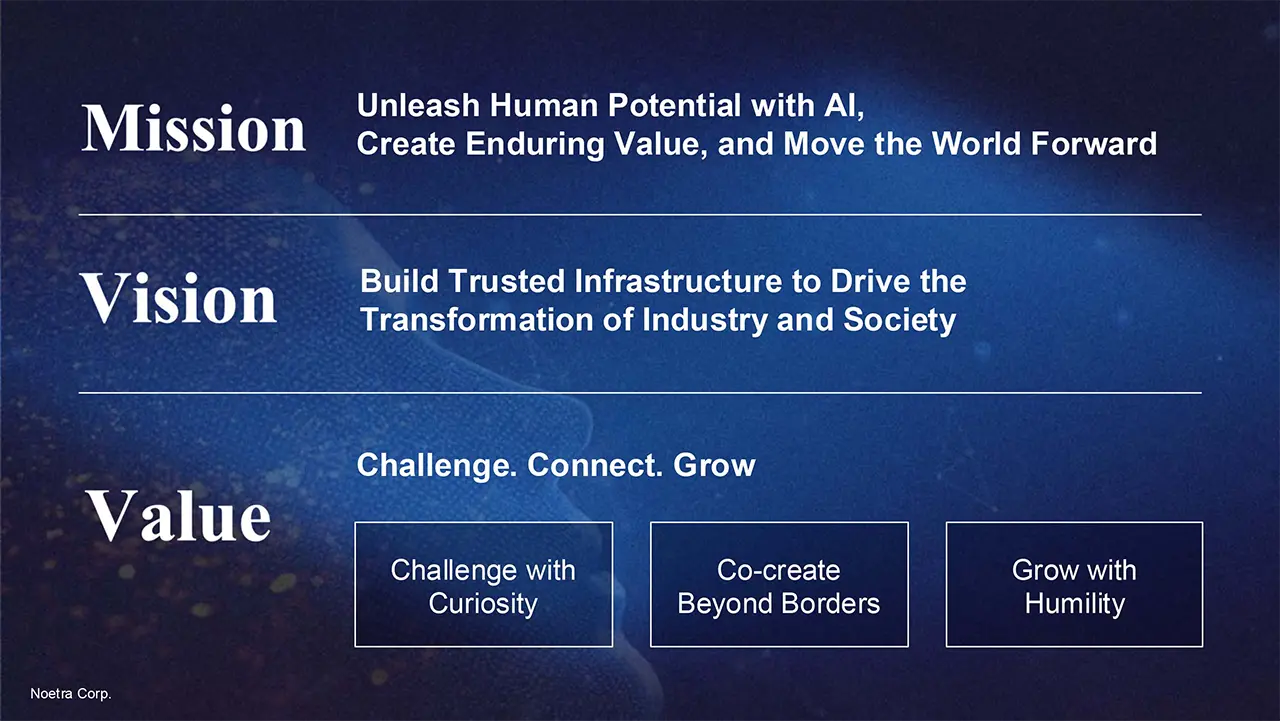
Tamotsu Saito, chairman of NEDO, concluded the event. Regarding the environment surrounding the development of generative AI in Japan, Tamotsu Saito explained,
“Although Japan had previously fallen behind AI leaders such as the U.S. and China, it has made steady progress over the past two years in terms of preparing computing resources and environments for development, developing professionals, and enhancing technical capabilities, as well as building datasets and implementing AI in society.” He went on to say, “The pieces are falling into place, and the policy is moving on to the next stage. Now is the time to step up our efforts to realize physical AI.”
He also emphasized that the key to the success of this project lies in “bringing together Japan’s strengths and fostering collaboration with overseas research institutions and companies.” NEDO, he said, intends to continue playing a central role in connecting diverse players from industry, academia, and government, while vigorously supporting the achievement of project goals, the generation of results, and the promotion of collaboration among businesses.